
The Bridge in “Annyeonghaseyo!”
I’ve written before about our practice of greeting everyone we pass on Jeju’s trails and streets—how a simple “Annyeonghaseyo” transforms strangers into neighbors, how it creates those fleeting moments of belonging. But I’ve been thinking more about what happens in that transformation, about the quiet alchemy that turns a word into a bridge.
The Weight They Carry
The locals here carry a particular shyness around foreigners—not unfriendliness at all, but something more tender. Perhaps it’s the anxiety of not knowing English in a world that seems to demand it. Perhaps it’s the vulnerability of being misunderstood, or the fear of embarrassing themselves. Perhaps it’s simply the weight of being an island people who have learned, over centuries, to be cautious of outsiders.
Whatever the source, you can see it in the way their eyes flicker toward us and then away, in the way they seem to hold their breath as we approach, in the careful neutrality of their expressions that says: I will not risk any embarrassment.
Until we greet them in Korean. Until we show them, we are taking the risk.
Then the incredible shift happens. We are no longer strange foreigners but fellow travelers sharing this universe. We make their day as they often tell us with their transformed smiles. But the deeper truth is that they make ours just as much, by showing us that the space between different worlds is smaller than fear suggests.
The Grandmother Who Kept Saying “Jo-ta”
A few days ago, during our regular coffee run through our neighborhood, we passed a small gathering of elderly women sitting together in that unhurried way that speaks of long friendship and comfortable silences. We offered our usual greeting—”Annyeonghaseyo”—and most smiled and nodded, a gentle acknowledgment.
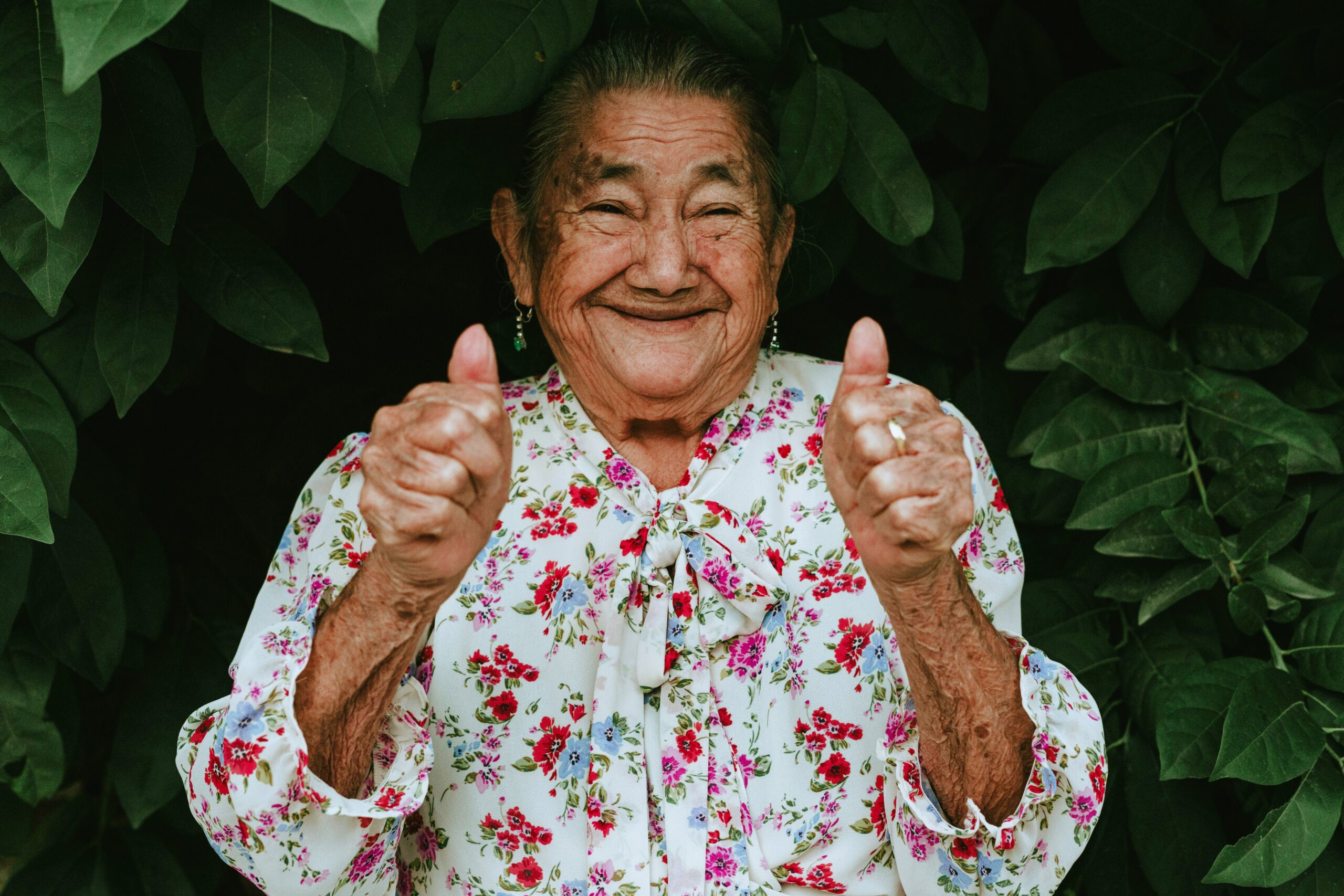
But one grandmother responded differently. Her “Annyeonghaseyo” back to us was boisterous and brave, a clear statement that she wanted more than a passing greeting. With her larger-than-life tooth-deficient smile, she transformed this brief encounter into something much more meaningful. She asked us eagerly a few questions about where we live and where we’re from and then sent us off with lingering smiles on our faces.
A few hours later, on our recycling run, we encountered her again. Now she was clearly happy to get clarity on her earlier questions and establish a bit more about us. Where did we come from, when did we arrive, where exactly do we live, in what house? “Ah, the tall one, with two stories”. Do I have a mom? Where is my husband from? And as we parted ways, she seemed so pleased, so happy about this moment and kept repeating this expression like a small song: “좋다, 좋다,좋다” (Jo-ta, Jo-ta, Jo-ta!!!)—which translates roughly into “good, good, very good” but feels closer to “I love it, I love it, I love it” or perhaps simply “yes, yes, yes!!”
Either way, I’m still not entirely sure what she was celebrating. The surprise of foreigners choosing to live in her neighborhood? Or us as a couple, holding hands as we always do? (By the way, I often wonder what the shy conservative locals think of us—we’re not so young anymore. In fact, we’ve grown old together.) Or the simple gift of the exchange itself—two parties reaching across difference to say “I see you”?
It didn’t matter. We all walked away wearing smiles too big for our faces, reminded that human connection doesn’t always need perfect communication. Sometimes it just needs willingness.
What Lives in a Greeting
There’s something profound hiding in these small exchanges, something that has nothing to do with language proficiency and everything to do with courage.
A greeting, I’m learning, is not just politeness or custom. It’s an act of faith. It says: I choose to acknowledge you. I choose to recognize that the space between us can hold something beautiful, even if I can’t predict exactly what that might be.
When we say “Annyeonghaseyo” on these island paths, we’re not just practicing a simple greeting. We’re connecting with the wider world, showing that strangers don’t have to stay strange, that difference is just an invitation waiting to be accepted, that every face we pass carries the same longing to be seen and welcomed that we carry in our own hearts.
We lay down that first stone—a greeting, a smile, a moment of genuine attention—and somewhere in the mysterious architecture of human connection, it becomes part of something larger than ourselves, the foundation for genuine community.
Every “Annyeonghaseyo” we offer plants a seed. Every returned smile is evidence that something is growing—not just between us and our neighbors, but in the deeper soil of what it means to share space with grace, to meet difference with curiosity instead of fear, to believe that we’re more alike than we are apart.
Perhaps that’s what the grandmother was really celebrating with her joyous “Jo-ta.” Not just “good” but “yes”—yes to the risk of connection, yes to the beauty of trying, yes to all the small brave acts that remind us we’re not meant to live as islands, even when we live on one.
